From Sketch to Skyline: The Journey of Iconic Buildings
- Posted on 1 year ago
- peter
- 0 Comments
- 186 Views
Traveling experience
Every unforgettable city silhouette—from the elegant spires of the Empire State Building to the soaring shells of the Sydney Opera House—began as nothing more than an idea, a vision, a sketch on a page. The journey of transforming an inspired concept into a colossal, habitable structure that defines a generation is one of the most complex and fascinating endeavors in human history. It’s a testament to creativity, engineering, and sheer audacity.
Here is a look at the essential phases that take a great idea and turn it into a global icon.
💡 Phase 1: The Spark of Inspiration and Conceptual Design
An iconic building is rarely the result of simply fulfilling a brief; it’s the culmination of an architectural statement. This is where the initial, radical idea takes hold.
The Visionary Moment: Architects find inspiration in the most unexpected places. Jørn Utzon famously found the form for the Sydney Opera House in the segments of an orange peel, while the Dancing House in Prague was inspired by two dancers. The initial concept must be so unique that it stands out with a simple, instantly recognizable silhouette .
Client Collaboration: The architect works closely with the client to translate the vision into a functional program, balancing artistic ambition with practical needs, budget, and purpose.
Site Analysis: Before a single line is finalized, the team must deeply understand the site—its climate, soil, history, surrounding urban fabric, and crucial legal constraints like zoning laws and building codes. An iconic building must challenge context while respecting its environment.
📐 Phase 2: Design Development and Detailing
The concept must now become a constructible reality. This phase is a rigorous collaboration between the architect, structural engineers, and systems specialists.
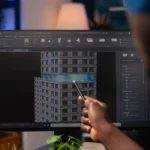
From Sketch to Model: Hand-drawn sketches evolve into detailed plans and, increasingly, advanced 3D models using Building Information Modeling (BIM). These models allow all stakeholders to visualize the building, test its performance, and resolve complex geometrical and structural issues before construction begins.
Material Selection: Every material choice is critical. Iconic architecture often employs a courageous and honest use of materials—from Frank Gehry’s shimmering titanium scales on the Guggenheim Bilbao to the vast amounts of concrete in the Pantheon’s dome. The materials must be durable, aesthetically powerful, and often, new applications of technology for their time.
Engineering Marvels: For buildings that push the boundaries of height or form—like the anti-cyclone engineering of the Burj Khalifa or the structural gymnastics of the Shanghai Tower—this phase involves unprecedented engineering solutions to ensure the design is stable and safe.
🚧 Phase 3: Navigating Permits and Construction
The move from paper to physical reality is the longest and most challenging phase.
The Regulatory Maze: Before ground can be broken, all plans must be approved by city authorities. For complex or groundbreaking designs, this process can take years, as regulators must grapple with entirely new construction methods and materials. Bravery from city officials is often as necessary as the architect’s vision.
Groundbreaking Innovation: Construction of iconic buildings often becomes a real-time laboratory for innovation. For instance, the sheer height of skyscrapers requires groundbreaking logistics for lifting materials and people. The construction process must be precise, often working with extremely narrow tolerances to execute the architect’s vision perfectly.
The Test of Time: Quality of construction and materials must be uncompromised, as these structures are built to endure for centuries, becoming historical, economic, and cultural symbols.
The finished building is more than just a structure; it is a poetic metaphor for its age, a masterpiece of art and science that literally re-shapes the city’s skyline. The journey from that first, bold sketch to the final gleaming glass or stone façade is an epic of dedication, a story of how a team of passionate professionals can quite literally build the future.
Related Posts
Sustainable Spaces: How Green Architecture is Reshaping Cities
- peter
- August 28, 2025
Traveling experience The concrete jungle is breathing again. In an era defined by climate chang ..
Leave A Comment Cancel reply
You must be logged in to post a comment.