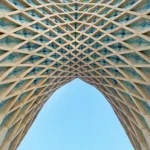
Designing the Future: Modern Architecture Trends in 2025
- Posted on 1 year ago
- peter
- 0 Comments
- 354 Views
Traveling experience
Architecture is always a reflection of its time—and in 2025, the central concerns are clear: climate responsibility, digital fluency, and human well-being. The clean lines of modern design are no longer just about aesthetics; they are integrated with intelligent systems and a deep commitment to sustainability.
Here are the biggest trends reshaping the built environment, shifting design from simple structure to holistic system.
🌎 Sustainability and Regeneration: Building for a Better Planet
The most defining trend is the shift from “doing less harm” to actively improving the environment.
Regenerative Architecture: This goes beyond simple sustainability. Regenerative buildings are designed to be an extension of the natural environment, aiming to give back more than they take. This includes designing spaces that provide new habitats for local flora and fauna (like vertical gardens and green roofs) and structures that replenish resources, such as advanced rainwater harvesting.
Net-Zero Buildings: The standard for new construction is increasingly becoming Net-Zero Energy, meaning the building generates as much renewable energy (via integrated solar panels, geothermal, etc.) as it consumes over the course of a year.
The Material Revolution: Architects are prioritizing sustainable materials with low environmental impact, such as mass timber (Cross-Laminated Timber or CLT), recycled steel, and low-carbon concrete. The entire lifecycle of a material, from sourcing to disposal, is now a key part of the design process.
🌿 The Human-Centric Design Shift: Biophilia and Wellness
Following years of digitalization and remote work, the focus is intensely on creating spaces that support physical and mental health.
Biophilic Design: This philosophy is no longer a luxury, but an expectation. It involves the integration of nature into the built environment to reduce stress and boost productivity. Key features include living walls, natural material palettes (wood, stone, bamboo), and maximizing natural light to blur the boundary between indoor and outdoor spaces.
Adaptive Reuse: Instead of tearing down and building new, repurposing existing structures like old warehouses or commercial offices into residential or mixed-use spaces is surging. This not only promotes circular sustainability but also preserves cultural context and speeds up housing solutions.
The Flexible Home: The continued popularity of hybrid work means homes are now viewed as “lifestyle instruments.” Design emphasizes multi-functional spaces—using movable walls, modular furniture, and integrated technology to easily transition a single room from a dedicated office to a family dining area.
🤖 Integrated Technology: Smarter Design and Construction
Technology is moving from being an added feature to being fundamental to the design process itself.
AI and Parametric Design: Tools like Artificial Intelligence (AI) and Parametric Design are transforming the design workflow. AI algorithms can optimize building layouts, energy performance, and material use, freeing up architects to focus on creativity. Parametric design allows for real-time visualization of how changing one variable (like sun angle or wind flow) affects the entire, often complex, geometry of the building.
Smart Building Systems: Buildings themselves are getting smarter, utilizing the Internet of Things (IoT) to manage light, HVAC, and security. These intelligent systems learn occupant preferences and automatically adjust to optimize comfort and drastically minimize energy consumption.
Modular and Prefab Construction: To address the need for faster, more cost-effective, and less wasteful construction, modular and prefabricated components are becoming standard. Manufacturing parts off-site in controlled factory environments improves quality, reduces waste, and allows for rapid assembly on location.
The architecture of 2025 is a marriage of ancient wisdom—the human need for connection with nature—and cutting-edge technology. It’s about designing buildings that don’t just stand on the land, but that work with it.
Would you like to explore how mass timber (CLT) is revolutionizing skyscraper construction as a sustainable alternative to steel and concrete?
Leave A Comment Cancel reply
You must be logged in to post a comment.